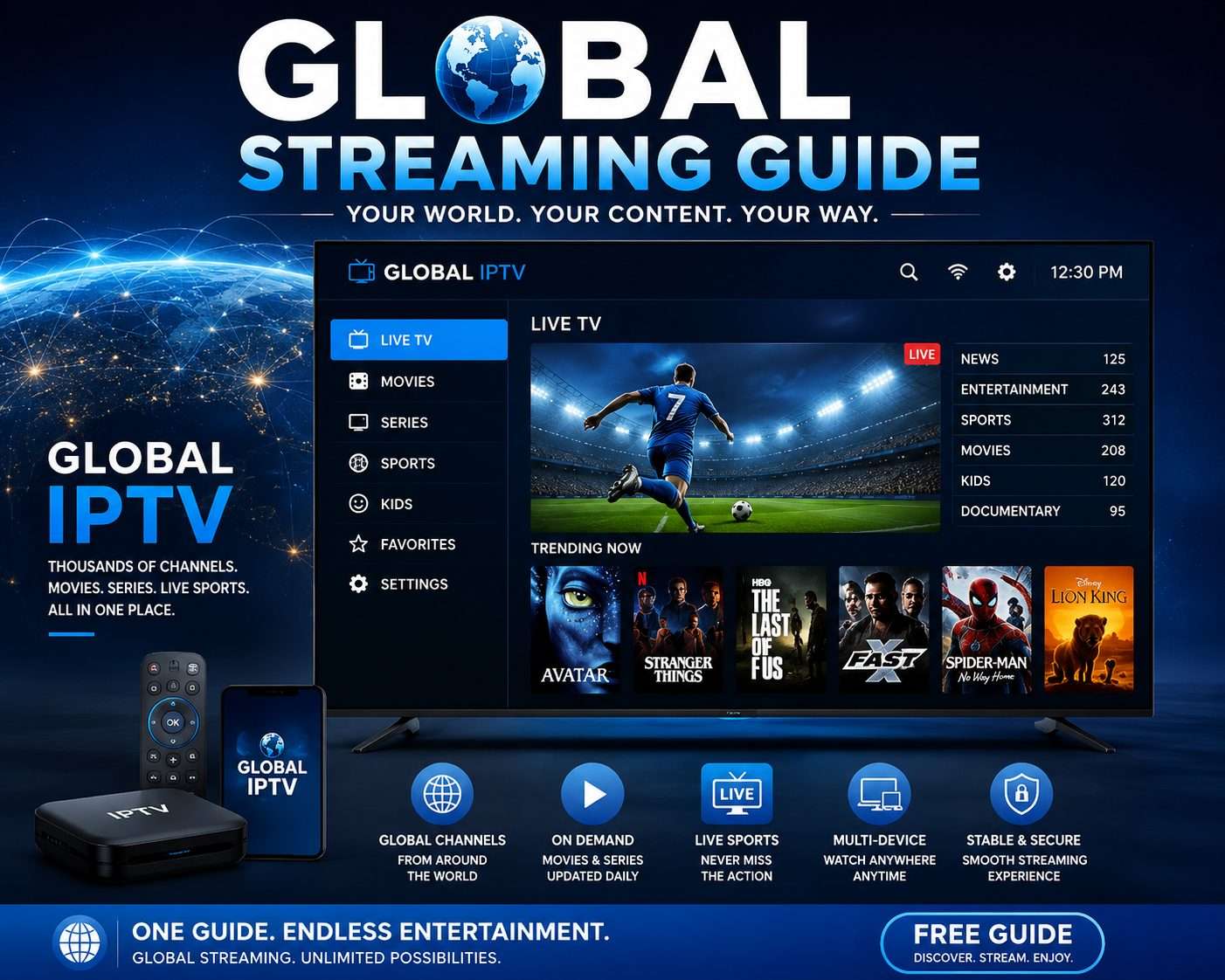
IPTV vs cable, also known as Internet Protocol Television, is a form of delivery of content via the internet instead of the regular broadcasting systems. It implies that the users will be able to stream live television, on-demand films and even watch the shows that were aired earlier. The popularity of IPTV is also highly related to the increase in high speed and access of broadband making it a formidable competitor to traditional services.
Modern systems IPTV enable users to customize their experience unlike the older ones. This level of control in selection of what to view and the time of viewing is only one of the largest factors that make IPTV popular to viewers globally.
How Cable TV Works
Home entertainment has over decades been supported by the cable TV. It is run by a system of coaxial cables which transmit channels to televisions. It offers a stable and reliable viewing experience, but not flexibility, which is often desired by modern users.
Generally cable TV services do come in packages, that is, people have to subscribe to a package of channels instead of choosing the channels themselves. The model may be constraining as opposed to the newer ones.
IPTV Streaming and Cable: You can bend It.
Among the most notable distinctions are the comparisons made between the IPTV streaming vs cable. The IPTV enables the viewers to pause, rewind and have access to the content at will, whereas the cable TV is fixed in its schedule of broadcasting. This implies that through IPTV, the users will not necessarily have a particular time slot.
This adaptability has revolutionized the viewing preferences. Individuals are no longer required to turn on their TVs at night on a regular basis. They are able to consume content at any time when they want to, which includes taking a lunch break, during a commuting trip or when it is late at night. Cable TV on the other hand dictates the viewers to align their schedules with programming.
IPTV and Traditional Cable TV: IPTV vs Cable TV: User Experience.
User experience is important when comparing IPTV and traditional cable TV. IPTV applications have up-to-date interface that incorporates search facilities, recommendations and simple navigation. These options ease tasks like uncovering new content and controlling viewing preferences.
Cable TV interfaces tend to be less refined and aimed at channel surfing and not customisation. Although they are simple, they do not have sophisticated functionalities that make users interactive.
Comparison and Value of Cost.
The issue of cost is a significant factor in determining IPTV versus cable. The IPTV services can be cheaper than otherwise since they do not demand a huge amount of infrastructure and maintenance. Users will also be able to subscribe to the plans that are flexible and are not long-term commitments.
Cable TV, however, is not always free and free, and it might cover extra charges like installation charges, equipment rent services, and package channel selections. All these costs may accumulate with time and cable would be a more expensive alternative among many households.
Variety and Availability of Content.
IPTV has a broad spectrum of content offerings, such as international channels, niche content, and on-demand libraries. This is because such diversity enables users to access content outside their regional bound.
The cable TV offers good choice of channels but is generally limited by the location and provider offerings. Although it maintains a wide audience, it might not be as global as the IPTV services.
Comparison of IPTV and Cable in Set up.
The disparity between IPTV and cable is particularly evident as far as installation is concerned. IPTV has easy set up with minimal requirements which may only include an internet connection and a compatible device. This ease of use ensures that it can be used by a large number of users.
Installation of cable TV can be more complicated and requires technicians, wiring and special equipment. This arrangement is stable, but may be less convenient in other cases where its users want a fast and easy remedy.
Compatibility and Convenience of devices.
The characteristic of interest among IPTVs is its cross device compatibility. Smart TVs allow users to view content on all six screens, whereby viewers can view the content on smartphones, tablets, and laptops.
Cable television is usually restricted to set-top box-connected television sets. This limitation makes it less mobile and flexible towards the current way of life.
Cable TV vs IPTV Services: reliability and performance.
Reliability is a factor when comparing cable TV vs IPTV services. Cable TV cannot be affected by internet connection and is therefore very reliable in locations where there is limited internet connection.
IPTV is dependent on speed and stability of the internet. This may at times result in buffering, but this has not been the case since internet technology has greatly enhanced performance. The viewing quality of IPTV in places where there is high connectivity may be smooth and quality.
Video and Streaming features.
IPTV services commonly enable high-definition and ultra-high-definition content streaming providing plenty of sharp images and immersive experiences. Speed is a crucial factor in the quality, but the contemporary connections are capable of processing 4K content as well.
Cable TV does have a steady quality, but may not necessarily support the latest developments in resolution. I successfully use IPTV to advance the boundaries of what can be done in home entertainment as technology advances.
The Future Trends in Television.
The television will more and more adopt a digital mode, and IPTV will be on the forefront of it. Following the ongoing enhancement of internet infrastructure, the number of users that will shift to IPTV services is likely to rise as opposed to those using cable. This turn is an indicator of a new preference to on-demand content and individual viewing.
Cable Television is changing by incorporating some digital functionality, yet its age-old paradigm is struggling to keep pace with the fast changes in technology.
Final Thoughts
The decision of using either IPTV or cable rests on your priorities. IPTV is probably preferable to you when you want flexibility, cheap and contemporary features. Cable TV might fit the bill should reliability and simplicity be more crucial.
IPTV is a progressive tool that can respond to the requirements of the current audience in the further development of home entertainment. With the further development of technology, it can further influence the way people watch television.